
What is Modern Slavery?
A clear explanation of modern slavery — what it looks like, who it affects, and why it matters.
Modern slavery sounds like something from the past, but it is not. Right now, millions of people around the world are being forced to work, trapped in situations they cannot escape, and treated like they do not matter. This article explains what modern slavery actually is, what forms it takes, and what you can look out for.
What does modern slavery mean?
Modern slavery is a term that covers several types of serious exploitation. In simple terms, it means one person controls another person for profit. The victim cannot leave because of threats, violence, lies, or debt.
The International Labour Organization estimates that around 50 million people are living in modern slavery on any given day. That is more than the entire population of countries like Spain or South Korea.

Common forms of modern slavery
Modern slavery is not just one thing. It takes many different forms:
- Forced labour — being made to work under threat, with little or no pay. This happens in factories, farms, fishing boats, and construction sites.
- Human trafficking — being moved or recruited through force or deception for the purpose of exploitation.
- Domestic servitude — being trapped as a household worker, often hidden behind closed doors with no freedom.
- Forced marriage — being married against your will, sometimes as a child, without the ability to say no.
- Sexual exploitation — being forced into sex work through coercion, manipulation, or violence.
- Child labour — children being made to do dangerous or exploitative work instead of going to school.
These are not rare cases. They happen in every country, including wealthy ones. Exploitation hides in supply chains, private homes, and online platforms.
Who is affected?
Anyone can become a victim, but some people are at higher risk:
- People living in poverty who are desperate for work
- Migrants who do not have legal documents or language skills
- Children who have no family support or education
- People escaping conflict or disaster zones
- People who have been deceived by fake job offers or relationships
Modern slavery does not always look like chains and locked doors. Sometimes the control is through debt (“you owe me money, so you have to keep working”), confiscated passports, isolation, or threats against a victim’s family back home.
Warning signs to look for
If you see any of these signs, the person might need help:
- They seem afraid of someone who speaks for them or controls them
- They have no access to their own identity documents
- They live and work in the same place and cannot leave freely
- They show signs of physical abuse or extreme exhaustion
- They are not paid or are paid far below what is normal
- They seem isolated and are not allowed to talk to others on their own
- They were brought into the country with promises of a good job that turned out to be fake
The numbers
Here is a quick look at the scale of the problem:
| Statistic | Figure |
|---|---|
| Total people in modern slavery | ~50 million |
| People in forced labour | ~28 million |
| People in forced marriage | ~22 million |
| Children in modern slavery | ~10 million |
| Share of victims who are women and girls | ~71% |
Source: Global Estimates of Modern Slavery (ILO, 2022)
Charts and Graphs
These are helpful infographics that can better help you grasp how modern slavery is not minor issue.
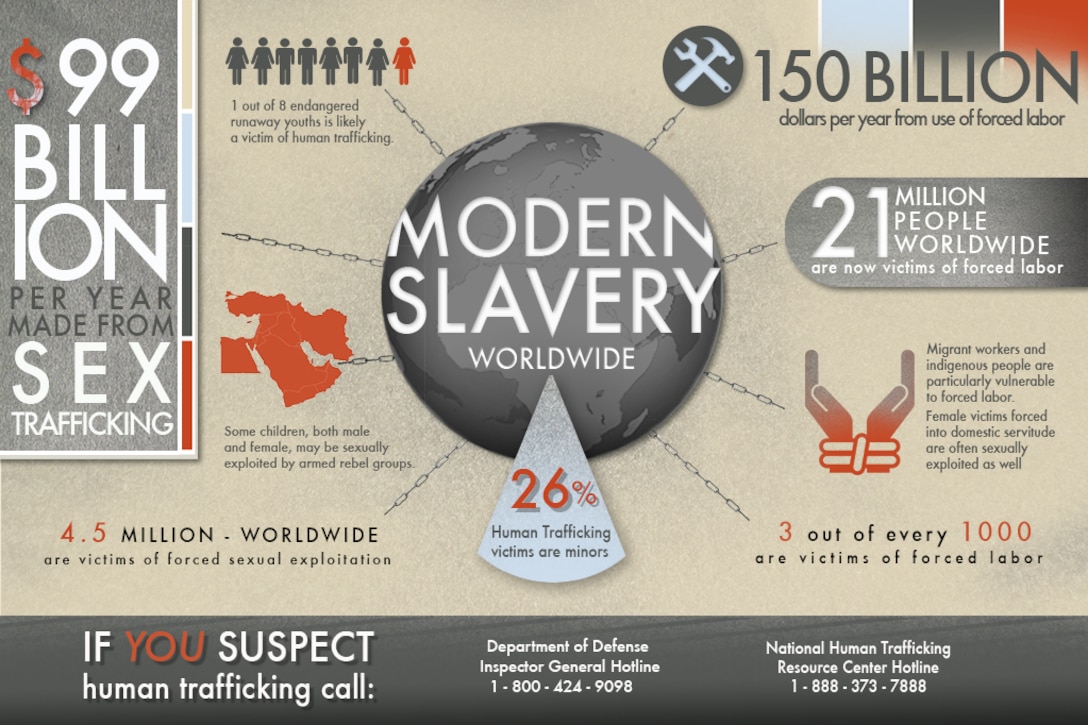 Source: U.S. Southern Command
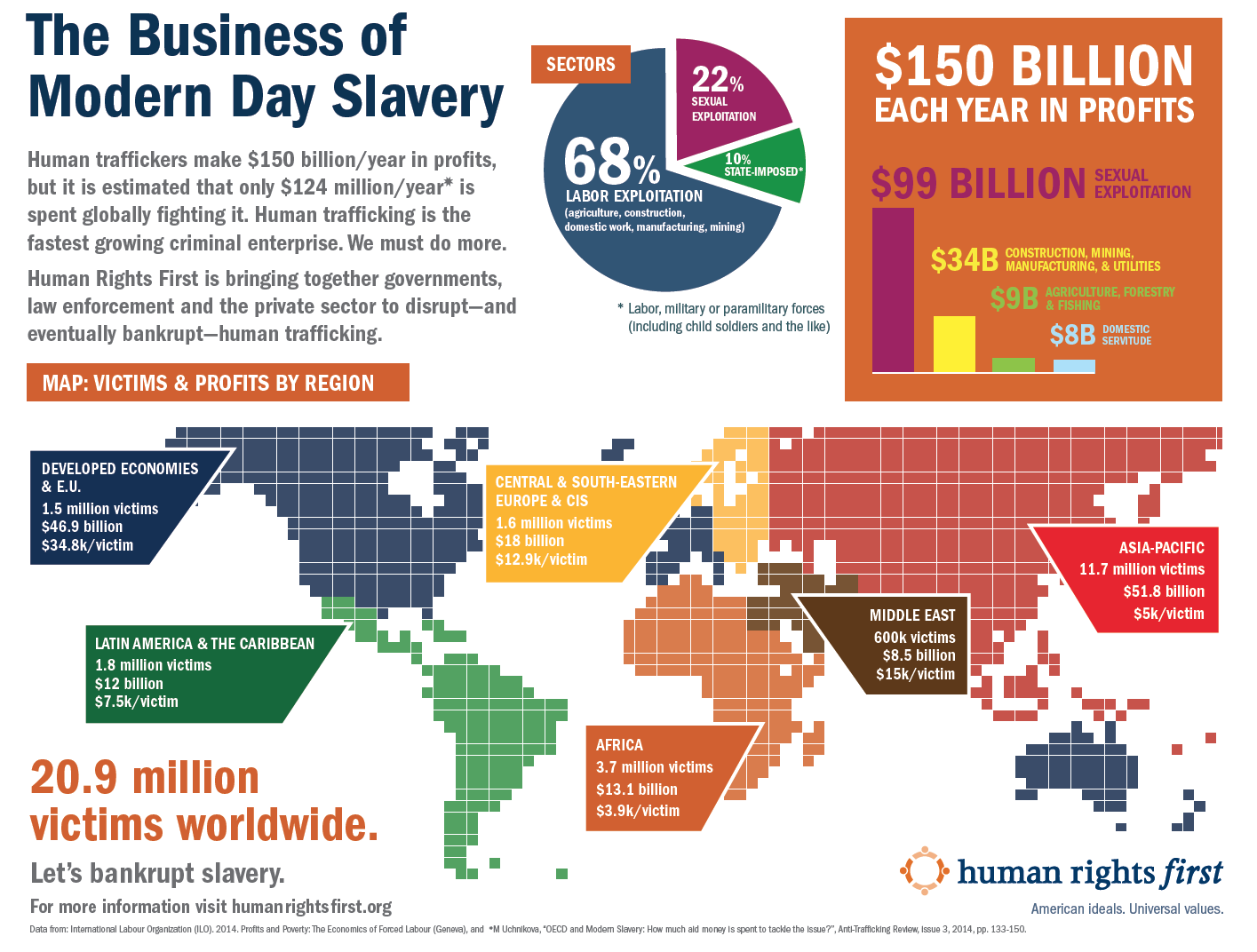 Source: Human Rights First Organization
Why should we care?
This is not just a problem for governments and charities. Modern slavery is connected to products we buy and services we use every day. The clothes we wear, the food we eat, and the electronics we use can all involve exploited workers somewhere along the supply chain.
Learning about it is the first step. When you understand what modern slavery looks like, you can:
- Recognise the signs in your own community
- Support organisations that help survivors
- Ask questions about where products come from
- Speak up so more people become aware
What can you do right now?
- Read more about the topic on the Anti-Slavery International website
- Share what you have learned with friends, family, or classmates
- Look at the Global Slavery Index to see how your country is doing
- If you think someone might be a victim, contact a local helpline or report it to the authorities
Modern slavery is a massive problem, but awareness is how change starts. The more people who know about it, the harder it becomes for exploitation to stay hidden.